
Baltimore, MD
ADA Compliant Porta Potty Requirements for Baltimore Events: A Complete Guide
Why ADA Compliance Isn't Just a Checkbox Exercise
Here's the thing about ADA requirements for portable restrooms: they exist because someone in a wheelchair shouldn't have to skip your festival, miss your street fair, or sit out your company picnic because you didn't think about accessibility.
I've watched event organizers in Baltimore panic about ADA compliance two days before their permit deadline, and I've seen others nail it months in advance. The difference? Understanding that this isn't bureaucratic nonsense—it's about making sure everyone can actually attend your event.
The Americans with Disabilities Act has specific rules for temporary facilities at public events. If you're hosting something open to the public in Baltimore—whether that's a 5K at Fort McHenry, a wedding reception at the Baltimore Convention Center's outdoor space, or a neighborhood block party in Fells Point—you need to get this right. And honestly, it's not that complicated once someone explains it without the legal jargon.
The Basic Math: How Many ADA Units Do You Actually Need?
The federal ADA guidelines require that at least 5% of your total portable restrooms must be accessible units. Here's where people get tripped up: you can't round down. If your event needs 10 standard units and 5% equals 0.5 units, you still need one full ADA-compliant portable restroom.
For most Baltimore events, the calculation looks like this:
- Events with 1-20 standard units: minimum 1 ADA unit
- Events with 21-40 standard units: minimum 2 ADA units
- Events with 41-60 standard units: minimum 3 ADA units
But here's what the guideline doesn't tell you: depending on your expected attendance and the nature of your event, you might want more than the minimum. When the Kinetic Sculpture Race comes through, or during Artscape weekend, smart organizers add extra accessible units because they know the crowds will be heavy and wait times matter.
One wedding planner I work with always adds an extra ADA unit for receptions over 200 guests, even when the math says she only needs one. Her reasoning? Nobody should have to wait in line because there's only one accessible option while there are eight standard units available.
What Actually Makes a Porta Potty ADA Compliant
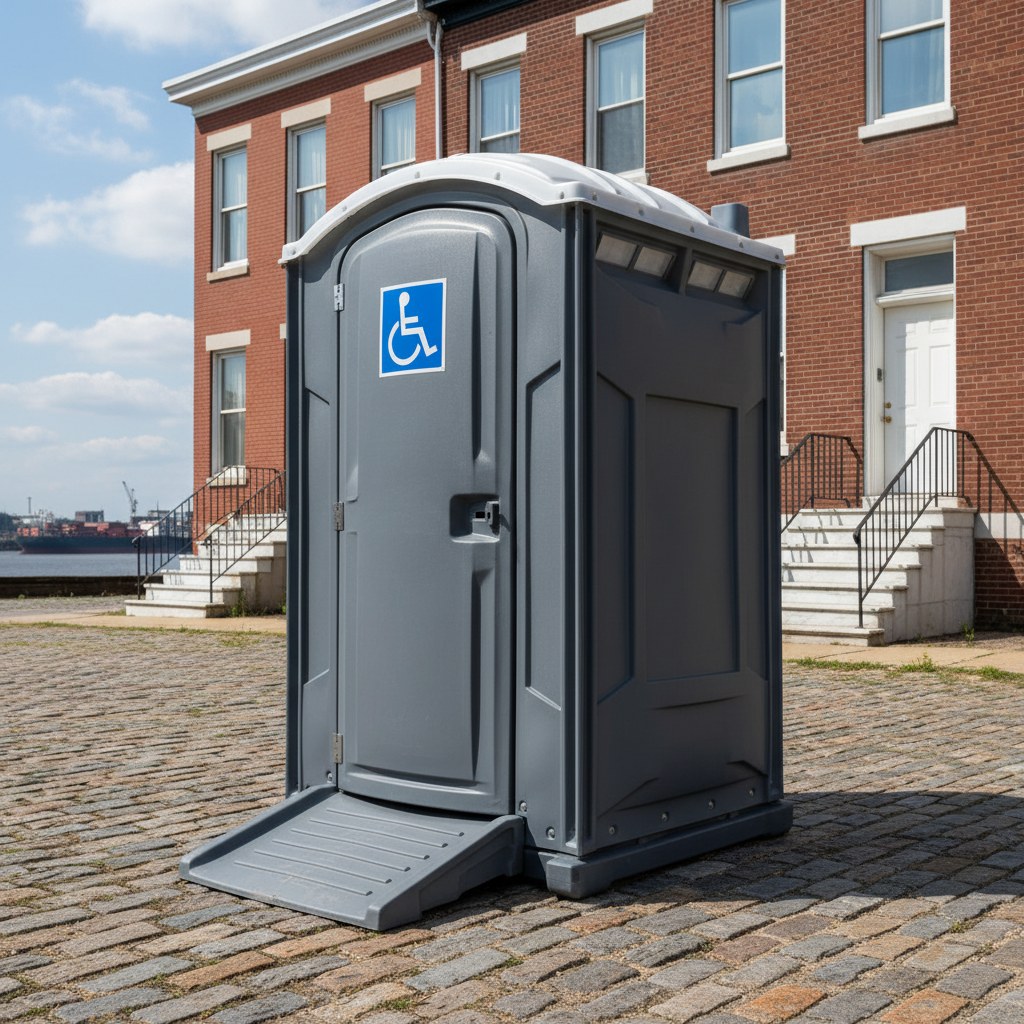
An ADA-compliant portable restroom isn't just a regular porta potty with a ramp slapped on the front. There are specific requirements that make these units genuinely accessible:
Interior Space Requirements: The unit must have at least 60 inches of clear interior space to allow for wheelchair turning radius. Standard porta potties are roughly 44 inches wide—ADA units are noticeably more spacious at 60 inches or more.
Door Width and Operation: Entry doors must provide at least 32 inches of clear width and include handles that don't require tight grasping or twisting. The door must be operable with one hand and not require more than 5 pounds of force to open.
Grab Bars: Interior grab bars must be installed at specific heights and locations to assist with transfers from wheelchairs. These aren't decorative—they're engineered to support body weight safely.
Toilet Height: The seat must be 17 to 19 inches from the floor, similar to standard toilet height, which is higher than most porta potty seats.
Handwashing Station: This is where many people get confused. While a handwashing station inside or immediately adjacent to the ADA unit isn't always legally required, it's strongly recommended. For events in Baltimore requiring city permits, having accessible handwashing options will save you headaches.
The units we deliver meet all these specifications, and they're designed for actual use—not just passing inspection.
Placement Rules That Baltimore Event Organizers Need to Know
You can have the perfect ADA-compliant unit, but if you place it wrong, you've accomplished nothing. The path to the accessible restroom matters as much as the restroom itself.
Ground Surface: The route from your event space to the ADA unit must be firm, stable, and slip-resistant. This is particularly challenging in Baltimore's older neighborhoods. Grass fields at Patterson Park might need temporary walkways. Cobblestone around Fells Point requires planning. Gravel lots near the port need stabilizing mats.
Path Width: The accessible route must be at least 36 inches wide. When you're dealing with rowhouse neighborhoods like Canton or Federal Hill where street access is tight, this sometimes means positioning the ADA unit differently than your standard units.
Slope Considerations: The path can't exceed a 1:12 slope (that's a one-inch rise for every 12 inches of length). Baltimore isn't flat. If you're setting up on one of those characteristically sloped streets near Mount Vernon, you might need additional ramps or repositioning.
Proximity: ADA units should be located on the shortest accessible route to your event activities. Don't stick them in the back corner because it's convenient for the delivery truck. Place them where they're actually useful.
Signage: Clear directional signage with the International Symbol of Accessibility helps everyone find the facilities. For larger events at venues like M&T Bank Stadium or Oriole Park at Camden Yards areas, this becomes critical.
I've delivered units to block parties where organizers had to coordinate street closures and parking permits with the city, only to realize they'd planned the accessible route across a curb with no ramp. These details matter.
Clean Comfort, Right on Time
Baltimore Permit Requirements and City Coordination
If you're planning an event in Baltimore that requires portable restrooms, you're probably also dealing with permits. The city takes accessibility seriously in its special event permitting process.
For events requiring a Special Event Permit from Baltimore City, your site plan must show ADA-compliant facilities and accessible routes. The Special Events Office reviews these plans specifically looking for accessibility compliance. I've seen permits held up because the site drawing didn't clearly indicate which units were ADA-compliant or because the accessible path wasn't marked.
Events at certain Baltimore venues have additional layers of approval. Anything near the Inner Harbor, at the Baltimore Convention Center grounds, or in city parks involves coordination with multiple departments. Start this process early—especially during peak season from April through October when permit applications pile up.
For street festivals and block parties, you'll also need to coordinate with the Department of Transportation for street closures and the Mayor's Office of Neighborhood Services. They want to see that you've thought through accessible parking near your accessible facilities.
The city doesn't mess around with this stuff, and honestly, they shouldn't. Getting it right from the start is easier than scrambling to fix it when your permit gets flagged for non-compliance.
Why us
Why FlushPoint
- Local to Baltimore, MD
- 5 services offered
Different Event Types, Different ADA Considerations
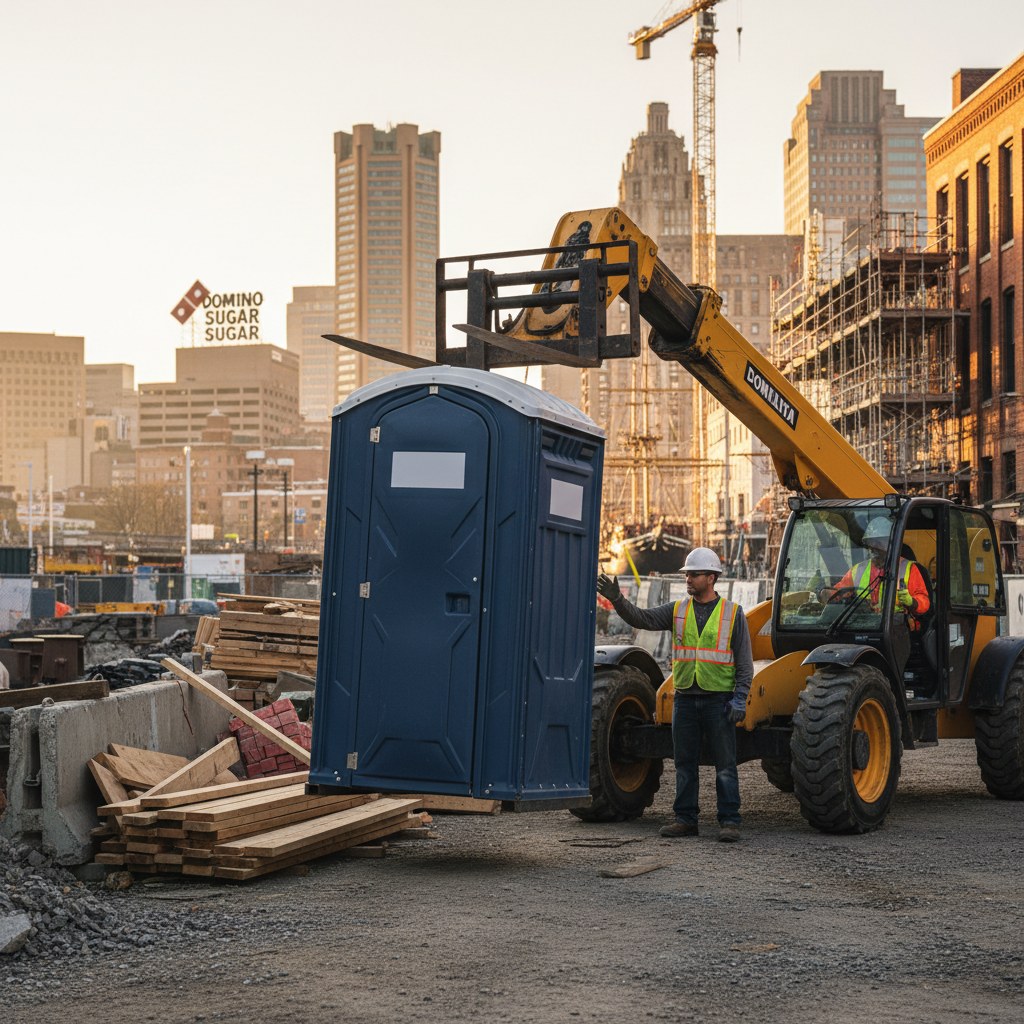
Construction Sites: While ADA compliance at construction sites follows OSHA rather than event guidelines, long-term projects should still consider accessibility for workers or visitors with disabilities. We handle weekly servicing for construction sites across Baltimore, from the ongoing port projects to residential developments in up-and-coming neighborhoods. If your site will have visitors or clients accessing the area, plan accordingly.
Weddings and Private Events: Here's where people get confused. If your wedding is truly private (invitation-only with no commercial aspect), ADA requirements may not legally apply. However, if your venue is normally open to the public or if you're hosting guests who need accessible facilities, providing them is both considerate and practical. Most wedding planners I work with include at least one ADA unit for larger receptions regardless of legal requirements.
Street Festivals and Public Gatherings: These absolutely require ADA compliance. Whether you're organizing the Fells Point Fun Festival, a farmers market, a 5K run, or a neighborhood block party, if it's open to the public, you need accessible facilities in the right proportion.
Corporate Events and Concerts: Company picnics, outdoor meetings, concert venues—these need accessible options. Even if your company has fewer than 15 employees (the threshold for some ADA employment provisions), accessibility requirements still apply to public accommodations and events.
Sports Tournaments: Youth soccer tournaments, rec league games, running events—all need accessible facilities. Parents, coaches, referees, and spectators include people with disabilities.
Beyond Standard ADA: Luxury and Restroom Trailer Options
Sometimes your event calls for something beyond a standard ADA porta potty. We provide multiple accessible options depending on your needs and budget:
Deluxe ADA Units: These meet all compliance standards but include upgraded interiors, better ventilation, and more aesthetic appeal. Good option for upscale events where function needs to meet form.
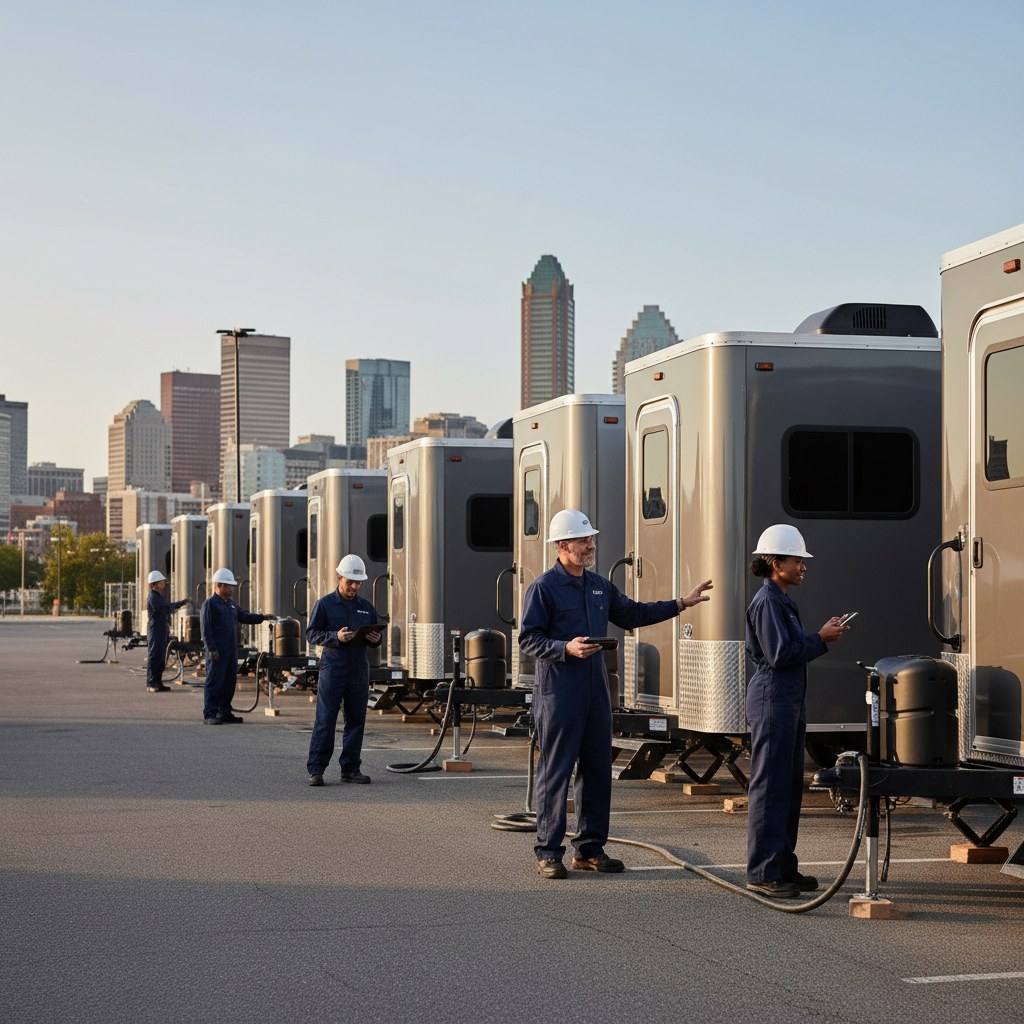
Restroom Trailers with Accessible Stalls: For high-end events, climate-controlled restroom trailers offer accessible stalls that feel more like indoor facilities. These work well for weddings at historic venues, corporate events, or VIP areas at larger festivals. The accessible stall in a trailer provides running water, climate control, and a much more comfortable experience.
Multiple ADA Units for Large Events: For major festivals or events expecting thousands of attendees, distributing multiple ADA units throughout the venue ensures that accessibility isn't limited to one location. The Preakness at Pimlico or similar large-scale events need ADA facilities at multiple restroom clusters.
All these options meet ADA requirements—the difference is comfort level and amenity. Your choice should match your event's scale and budget, with pricing starting well above $250 for accessible options.
What's Included and How Delivery Actually Works
When you rent an ADA-compliant portable restroom for your Baltimore event, here's what you should expect:
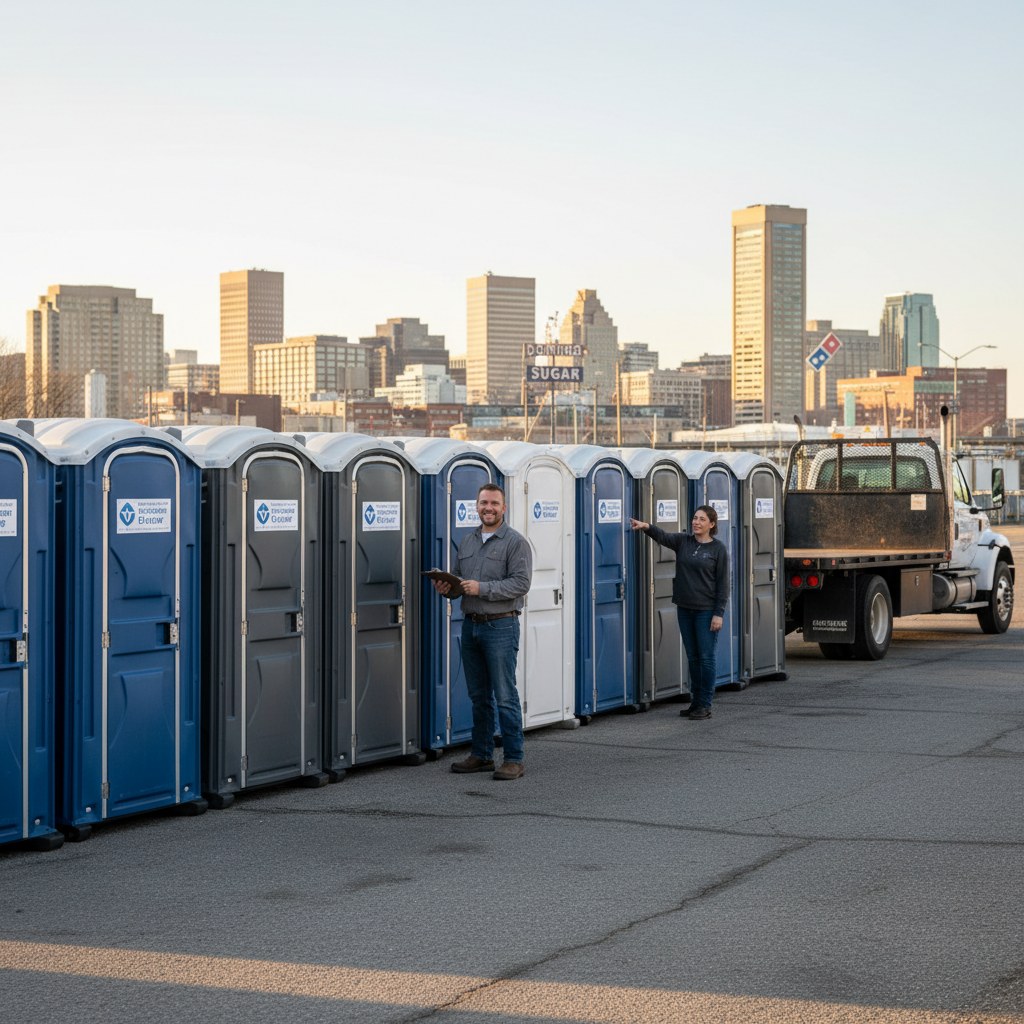
Standard Delivery Package: Delivery to your specified location, setup with proper anchoring if needed, initial stock of supplies (toilet paper, hand sanitizer), and scheduled pickup after your event. For events longer than a weekend, servicing is included based on the rental duration.
Supplies Included: Fresh toilet paper, hand sanitizer, and proper ventilation. For units with handwashing stations, soap and water tank fills are part of the service.
Setup Coordination: Especially in Baltimore's tight neighborhoods, setup timing matters. We've delivered to rowhome streets in Canton where parking had to be cleared, to construction sites near Johns Hopkins Hospital where access windows were specific, and to waterfront events where tide timing affected truck access. This coordination is part of the service.
Servicing Schedule: For short-term events (weekend or less), one initial setup is typically sufficient. For longer events or construction projects, weekly servicing maintains sanitation and restocks supplies. During peak summer construction season (June through September), regular servicing becomes even more important.
Pickup: Scheduled removal after your event concludes, usually within 24 hours unless you specify otherwise.
What shouldn't be included: surprise fees, complicated billing, or unreliable timing. Flat-rate transparent pricing means you know the cost upfront. Same-day delivery is available when you need units fast, though planning ahead gives you better scheduling options—especially during Baltimore's busy event season.
Clean Comfort, Right on Time
Common ADA Compliance Mistakes to Avoid
After working Baltimore events for years, I've seen the same mistakes repeated:
Assuming One Size Fits All: Ordering an ADA unit but not verifying it actually meets dimensional requirements. Not all "accessible" units are truly compliant.
Forgetting the Path: Providing the perfect unit but placing it across grass, gravel, or uneven ground with no accessible route. The unit is useless if people can't reach it.
Last-Minute Planning: Trying to source ADA units during peak season without advance notice. April through October is busy. March through May brings the spring renovation rush. Summer construction peaks. Plan ahead.
Ignoring Local Terrain: Baltimore's topography and historic street layouts create unique challenges. What works for an event in a suburban parking lot won't work the same way on a Federal Hill slope or Fells Point cobblestone.
Inadequate Signage: Having accessible facilities but not marking them clearly. People need to find them easily.
Cutting Corners on Quantity: Meeting the bare minimum when your event size or duration suggests you need more. Long lines defeat the purpose of accessibility.
No Backup Plan: Not having a servicing plan for multi-day events. A pristine unit on Friday becomes unusable by Sunday without maintenance.
These mistakes are all avoidable with proper planning and honest conversation with your porta potty provider.
Getting Your Quote and Planning Your Event's Facilities
Here's how to approach ordering ADA-compliant portable restrooms for your Baltimore event:
Start with Your Numbers: Expected attendance, event duration, and event type. A three-hour ceremony needs different planning than a three-day festival.
Consider Your Location: Fells Point requires different logistics than an open field at Fort McHenry. Street festivals need coordination with the city. Construction sites near the port have industrial access considerations. Private venues might have restricted delivery windows.
Think About the Full Picture: ADA units are one piece. You'll also need standard portable restrooms, possibly handwashing stations, maybe luxury options for VIP areas. Getting a complete quote for all your facilities ensures coordinated delivery and service.
Plan for Peak Seasons: If your event falls between April and October, book early. Summer construction season means equipment moves quickly. Spring renovation season creates competing demand.
Ask About What's Actually Included: Confirm delivery, pickup, servicing schedule, and supplies. Transparent pricing with no hidden fees means no surprises.
Get Your Timeline Right: While same-day delivery can handle emergencies, giving advance notice—especially for larger events requiring multiple units—ensures everything arrives when and where you need it.
The goal is clean comfort delivered right on time. That means ADA units that actually work, placed where people can use them, serviced so they stay functional, and picked up promptly when your event concludes. No games, no surprises, just reliable facilities that meet everyone's needs.
Frequently Asked Questions
How many ADA porta potties do I need for my Baltimore event?
Federal ADA guidelines require at least 5% of your total portable restrooms to be ADA-compliant. For most events, that means one ADA unit if you're renting 1-20 standard units, two ADA units for 21-40 standard units, and so on. However, depending on your expected attendance and event duration, you might want more than the minimum. For large festivals or all-day events, consider additional accessible units to reduce wait times.
What's the difference between a standard porta potty and an ADA-compliant unit?
ADA-compliant units are significantly larger—at least 60 inches of interior space compared to roughly 44 inches for standard units. They include grab bars at specific heights, doors with at least 32 inches of clear width, toilets at proper height (17-19 inches), and handles that don't require tight gripping. The extra space allows for wheelchair turning radius and transfers. They're purpose-built for accessibility, not just modified standard units.
Do I need ADA porta potties for a private wedding or party?
Legally, truly private events (invitation-only with no commercial aspect) may not be required to meet ADA standards. However, if your venue is normally open to the public or if you're expecting guests who need accessible facilities, providing them is both practical and considerate. Many wedding planners include at least one ADA unit for receptions over 150 guests regardless of legal requirements, ensuring all guests have comfortable access to facilities.
Where should I place ADA-compliant portable restrooms at my event?
ADA units should be located on the shortest accessible route to your event activities, with a firm, stable, slip-resistant path at least 36 inches wide. The route can't exceed a 1:12 slope. Don't place them in back corners or far from the main event area. In Baltimore's older neighborhoods with cobblestone or uneven terrain, you may need temporary walkways or stabilizing mats. Clear signage with accessibility symbols helps everyone find the facilities.
Do Baltimore city permits require ADA-compliant facilities?
Yes. Special Event Permits from Baltimore City require site plans showing ADA-compliant facilities and accessible routes. The Special Events Office specifically reviews applications for accessibility compliance. Events at city venues, parks, or requiring street closures need approval from multiple departments that all check for ADA compliance. Start your permit process early, especially during peak event season from April through October.
How far in advance should I book ADA porta potties for a Baltimore event?
For events during peak season (April through October), book as early as possible—at least several weeks in advance for larger events. Baltimore's busy event calendar, summer construction surge, and spring renovation season create high demand. While same-day delivery is available for emergencies, advance booking ensures you get the units you need when and where you need them, with time to coordinate placement and permits.
What's included with an ADA porta potty rental?
Standard rental includes delivery to your location, setup with proper anchoring if needed, initial stock of supplies (toilet paper, hand sanitizer), and scheduled pickup after your event. For events longer than a weekend, servicing is included based on duration. Units with handwashing stations include soap and water fills. Delivery timing is coordinated with your needs, especially important in tight Baltimore neighborhoods. Flat-rate pricing means no hidden fees or surprises.
Can I rent luxury or restroom trailer options that are ADA-compliant?
Yes. Beyond standard ADA porta potties, options include deluxe ADA units with upgraded interiors and ventilation, plus climate-controlled restroom trailers with accessible stalls. Trailers provide running water, indoor-like comfort, and meet all ADA requirements while offering a more upscale experience. These work well for weddings, corporate events, or VIP areas at festivals. Pricing varies based on the specific option but starts well above basic portable restroom rates.